

In many parts of California, local officials issued media access guidelines and rules that were overly restrictive and conflicted with longstanding news gathering traditions. Photo: Mark Larson
From Berkeley to Bakersfield, we are proud to have supported journalists documenting democracy
In times when doubt is widespread and misinformation is pervasive, we need more transparency, not less.
That’s why it was distressing when we started getting word in the lead-up to Election Day that some local officials had issued media access guidelines and other rules that were overly restrictive and, in some cases, conflicted with state law and longstanding traditions.
The press plays an integral role in a free and fair election, there to observe and document, to get voters the information they need both to participate in their democracy and to understand what transpired. To support California journalists who do this important work, we prioritized publishing an Election Day Access primer as one of our first offerings from our Reporter’s Field Guides projects. It’s also why we offered a number of trainings as Election Day approached, knowing newsrooms were making plans to effectively cover the vote.
That work also ensured that as we started getting reports of problematic restrictions surfacing in the lead-up to the midterms we were ready to act. We helped CalMatters advocate for all journalists’ ability to inform readers in Bakersfield, where our advocacy led the Kern County registrar of voters to roll back the most egregious aspects of its policy. We helped the Berkeleyside and Oaklandside newsrooms push back on the Alameda County Elections Office’s guidelines, which it quietly changed on Election Day.
With our partners, we also engaged directly with the California Secretary of State’s Office, having learned that some of the troublesome county guidelines likely drew from a pair of state notices and an agency regulation that included a problematic photo ban of outdoor public space it adopted as an agency regulation.
 |
|
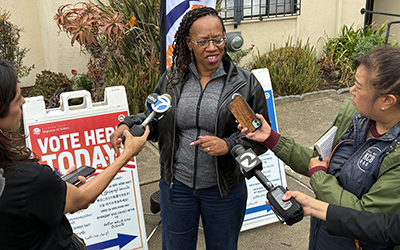
U.S. Rep. Lateefah Simon invited members of the press to document her voting at Allen Temple Baptist Church in Oakland on Nov. 3. Election officials prohibited reporters from filming or taking photos in the voting center and required members of the media to interview the member of Congress outside. Photo: Darwin BondGraham
|
While journalists were able to perform their important role in many communities, we heard from too many who faced rules that unnecessarily deprived their audiences of the kind of images and information they are used to receiving. New bans on photos in polling locations, tight restrictions around newsgathering where ballots were being counted, and even interview restrictions that went far beyond what relevant laws call for to protect voting rights posed barriers to coverage.
While Election Day is over, it’s clear our work is not. In the coming weeks, we’ll continue to work with state and local officials to try to ensure respect for newsgathering while balancing the concerns about voter intimidation and interference. And we’ll continue to advocate for a culture of transparency, the kind that has made American elections the envy of much of the world.
We understand our elections officials and pollworkers face challenges today that would have seemed unimaginable just a couple of decades ago. Cynical players have made an industry and a political movement out of election denierism. Concerns over harassment and threats have made it increasingly difficult for local elections officials to recruit poll workers, they report. And the current political climate seems to have everyone on edge, ready for the next shoe to drop.
But that’s all the more reason we need to ensure our reporters in the field have the same levels of access that have long served Californians. We need them there to document long lines, the presence of armed officers, disturbances, and whatever other threats loom. But just as importantly, we need them there to document democracy in action, the simple but profound act of people from all walks of life showing up with equal purpose and equal voice to chart our collective course forward.
Thadeus Greenson is a press education specialist at FAC and covered local elections in Humboldt County as a journalist for 20 years. Ginny LaRoe is FAC’s advocacy director and former news reporter and editor.